A Personal Flower Note for an Old Friend: Key Points
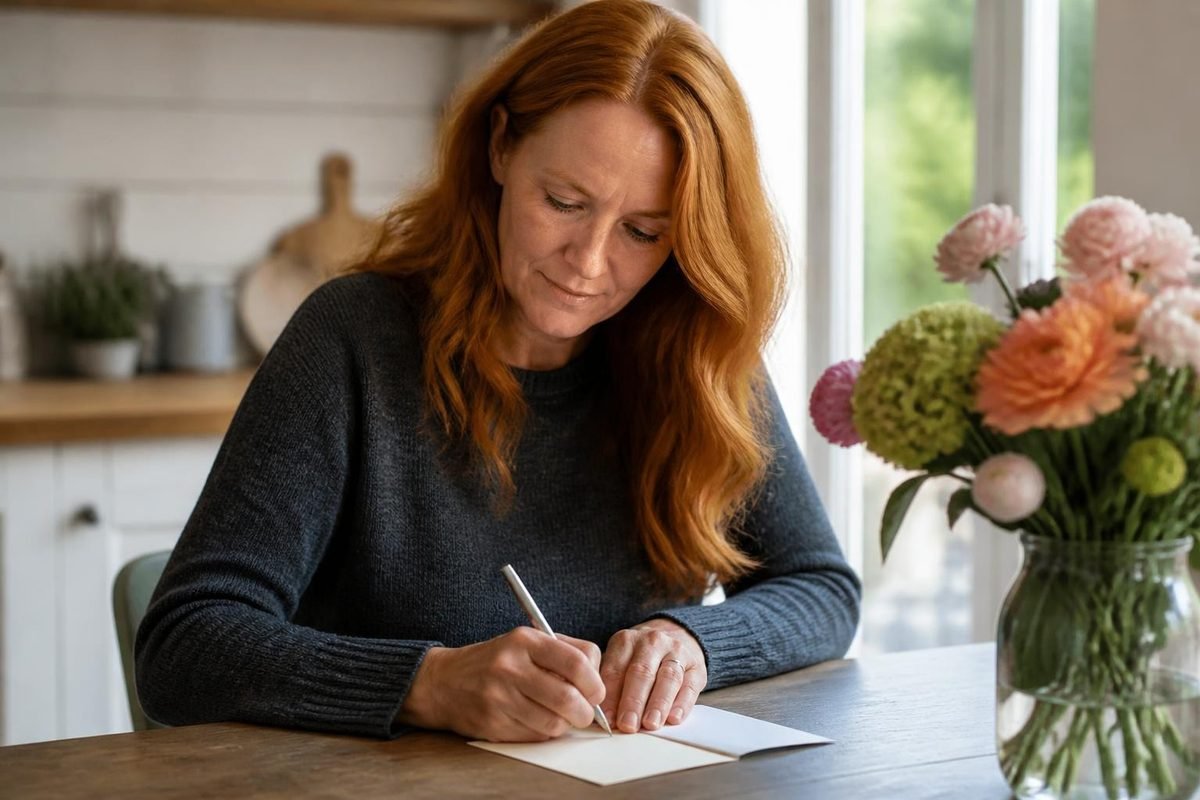
For a childhood friend, write a brief note explaining why they are on your mind, and include a memory you both share if one feels right. A few sincere words are enough to make the flowers feel thoughtful, so there is no need to compose a masterpiece.
Decide what you want them to hear
Begin by considering why you are sending the flowers. Perhaps your friend has good news to celebrate, is going through a hard spell, or has simply been out of touch for a while. Let the reason for your gift guide the message rather than trying to describe your whole friendship on a small card.
Call your friend by the name you usually use, and write as you normally speak. If you are both straightforward, a simple and direct note will likely feel more genuine than a polished, formal greeting. The card does not need to sound like anyone but you.
Bring up a memory you share
One little detail can call up years of friendship in just a few lines. You might remember walking to school, playing a particular game, or spending time in a familiar place. Pick a memory you think your friend will recall warmly.
For example, you might say, “Seeing these flowers brought back the garden where we used to play. I feel lucky that we are still friends.” Or write, “I often think about our walks home from school, and they still make me smile. You are on my mind today.”
Keep teasing and private jokes kind, particularly if other people may read the card. Leave out a story that could embarrass your friend or remind them of a painful time. There are plenty of happier moments to choose from.
Match the message to the moment
For a birthday, you could write, “Happy birthday to the friend I have known longest. We have been through so much together, and I hope the year ahead gives you many reasons to smile.”
If your friend is facing a difficult time, keep your words focused on them: “I am thinking about you and sending love. I can listen or keep you company if that would help.” Offer only the support you can truly provide, rather than making a promise you may not be able to keep.
There does not have to be a special occasion. Try, “I came across these flowers and thought of you. It would be lovely to catch up soon.” If you have not been in contact lately, you might add, “We have been out of touch for a long time, but you still cross my mind.”
Build a short, warm note
- Say why you are sending the flowers.
- Mention a memory you share or something you value about your friend.
- Close with a kind thought, a real offer of help, or a suggestion to meet or talk.
- Read the note once to check that it sounds like you, then add your name.
Cards have limited room, and two or three sentences usually do the job. If you have more to share, send a longer letter separately rather than squeezing it all onto the flower card.
Common questions about notes with flowers
What if it has been years since we talked?
Recognize that time has passed, but do not make your friend feel at fault for the silence. Let them know they have been on your mind and that you would be happy to hear from them.
Can I add a joke?
Humour is fine if it is part of your friendship and suits the reason for sending flowers. For a message of sympathy or support, avoid a joke that might pull attention away from what your friend needs to hear.
What is a good sign-off?
Write your name or the nickname your friend knows you by. Use “Love” if that is a natural way for the two of you to sign off.
Next step: fixes for wilting cut flowers